
· by Hanna Carolina · 5 min read
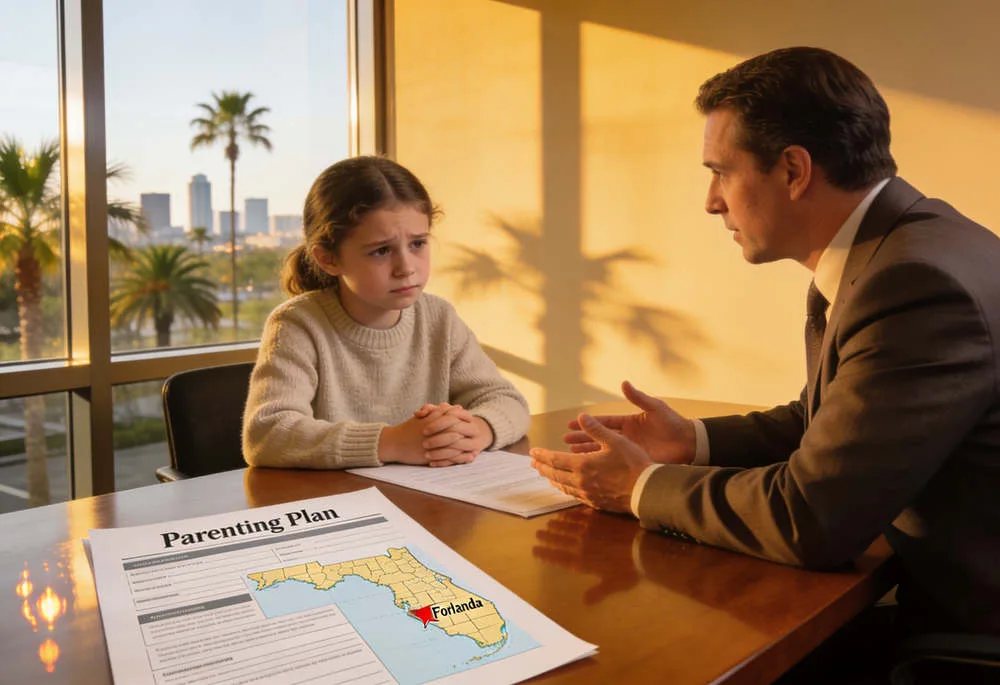
If your ex moves to another state, your existing Florida custody order generally stays in effect and Florida courts typically retain jurisdiction as long as your child continues to live here. The Uniform Child Custody Jurisdiction and Enforcement Act, known as the UCCJEA, is the framework that determines which state has authority over a custody case when parents live in different states. Understanding how it works is the first step before taking any action or making any agreements.
If your co-parent has moved, is threatening to move, or has taken steps to modify custody in another state, contact Ilvento Law to schedule a consultation before you sign or agree to anything at (407) 898-0747.
What the UCCJEA actually determines
The UCCJEA has been adopted in virtually every state, which means courts across the country use the same framework to decide which state has jurisdiction over a child custody matter. The central concept is the child's home state, generally the state where the child has lived for at least six consecutive months before a custody case is filed. For families in the Audubon Park area and throughout Orange County, that usually means Florida retains control of the case even after the other parent relocates, provided the child remains here.
Home state jurisdiction is not permanent by default. It shifts over time if the child's circumstances change. A child who moves with one parent to another state and lives there for six months or more may establish a new home state, which can affect which court has authority going forward. Families in communities like Hunters Creek, where military deployments and job relocations are common, run into this issue more often than most. The timeline matters, and acting early matters more.
There is also a concept called significant connection jurisdiction, which applies in narrower circumstances when no state qualifies as the home state or when the home state declines to exercise jurisdiction. Ilvento Law works with Orlando-area parents on exactly these situations, including cases where the jurisdictional picture is complicated by prior proceedings in multiple states or by parents who have relocated more than once since the original order was entered.
Enforcing a Florida custody order when your ex is in another state
One of the UCCJEA's most practical functions is giving Florida parents a way to enforce a Florida custody order in another state without having to relitigate the underlying case. Under the framework, the new state is generally required to recognize and enforce a valid custody order from the home state. That means if your ex is violating your parenting plan from across the country, you are not necessarily starting from scratch. The existing order carries legal weight.
Enforcement is not automatic, and it is not always simple. It requires filing in the appropriate court in the other state and demonstrating that the Florida order is valid and in effect. The process varies by jurisdiction, and an attorney who handles interstate family law matters can navigate that filing without requiring you to appear in a distant courtroom in most circumstances.
When your ex wants to modify custody from another state
The scenario that worries most Orlando parents is not enforcement but modification. If your ex has moved to another state and wants to change the parenting plan, can they file there instead of in Florida? Generally, no, not while Florida retains home state jurisdiction and the child lives here. The other state's court should decline to hear a modification request and refer the matter back to Florida.
The risk arises when a parent files in the other state without disclosing the existing Florida order, or when enough time has passed that the child's home state status is genuinely in question. Both situations require prompt legal response. Waiting to respond to an out-of-state filing, or assuming the Florida order will automatically protect you without taking action, can result in losing ground you did not have to lose.
International custody: a different layer of complexity
When one parent is a foreign national or has relocated outside the United States, the jurisdictional framework shifts from the UCCJEA to international treaties and conventions, most notably the Hague Convention on International Child Abduction, when it applies. Not every country is a signatory, and the protections available vary significantly depending on where the other parent has gone. These cases move quickly and require counsel with specific experience in cross-border family matters.
Ilvento Law handles international family law cases for Orlando-area clients, including parents dealing with a co-parent who has relocated abroad or who is a citizen of another country with family ties that create relocation risk. You can learn more about the firm's approach as an international divorce lawyer in Winter Park serving the broader Orlando region.
Act before the situation changes
Custody and jurisdiction cases reward early action. The parent who files first, responds promptly, and documents the child's residence and connections to Florida is in a better position than one who waits to see what happens. These cases are navigable with the right legal guidance, but the window to act effectively is not always open for long.
Call (407) 898-0747 or reach out to Ilvento Law to set up a consultation and get a clear picture of where you stand before your co-parent's next move becomes your problem to undo.