
· by Hanna Carolina · 6 min read
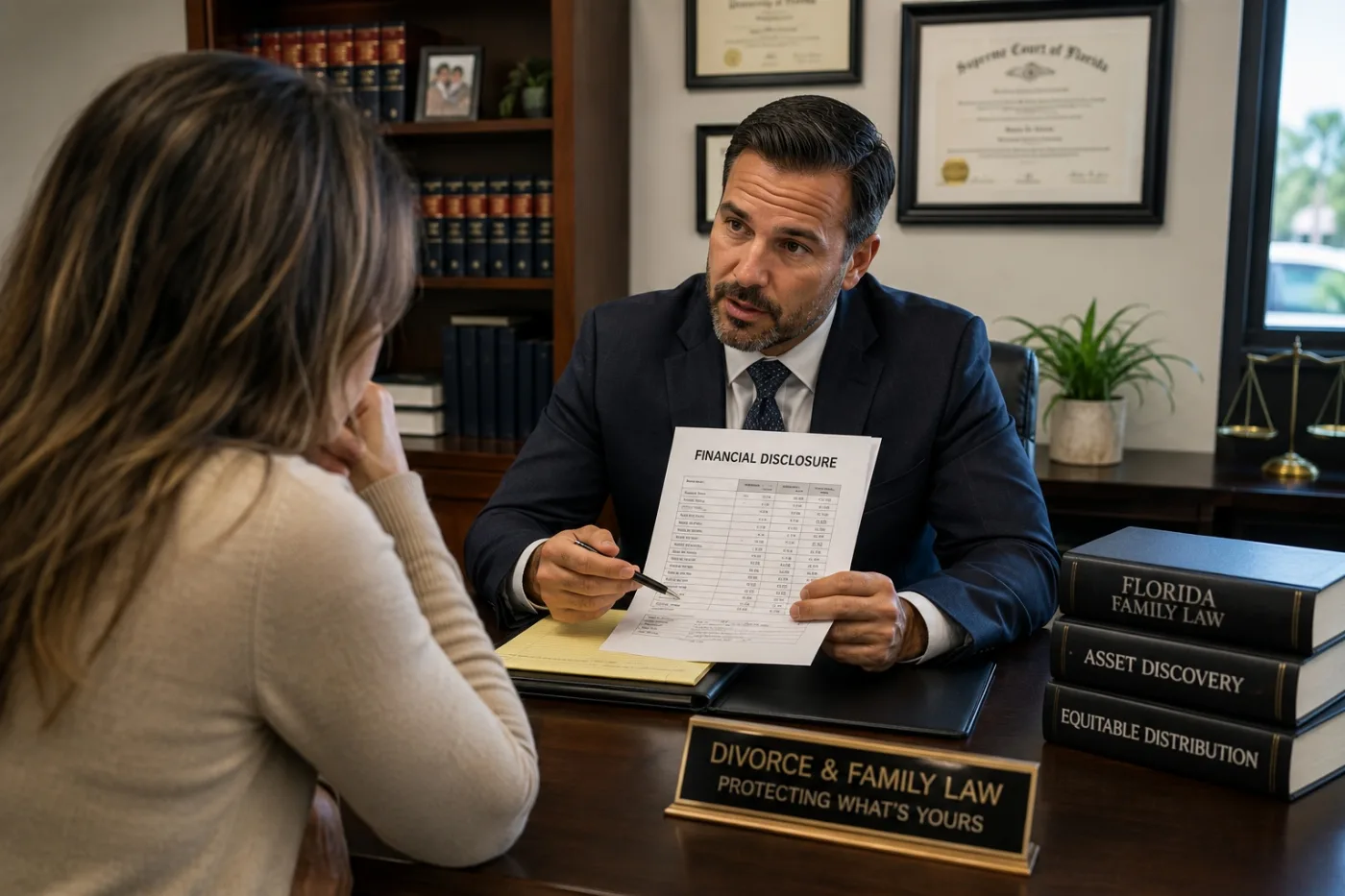
Suspecting that your spouse is hiding money changes the way you should approach divorce. Bank accounts, business income, investments, and other marital assets can be difficult to divide fairly if they are not fully disclosed. For spouses near Nehrling Gardens in Gotha, getting legal help early can preserve evidence and create a financial record before assets become harder to trace.
If you are noticing unexplained transfers or missing financial information around Gotha Community Park, call (407) 898-0747 or contact Ilvento Law to schedule a consultation before making decisions based on an incomplete picture of your finances.
For residents near the historic Zion Lutheran Church, Ilvento Law represents Gotha clients in divorce and property division matters throughout Orange County. Florida family cases require extensive financial disclosure, and an attorney can use additional discovery when the standard documents do not explain where income or property has gone.
Hidden Assets Are Not Always a Secret Bank Account
Some financial concealment is obvious. You may discover a bank statement for an account you never knew existed or notice large transfers immediately before separation.
Other situations are less straightforward.
A spouse who owns a business may report less income than the business appears to generate. Money may be moved between personal and company accounts, delayed until after the divorce, used to purchase property, or transferred to another person.
Investment accounts, digital assets, bonuses, commissions, retirement funds, and interests in privately held businesses can also require closer review.
Florida law generally treats assets acquired during marriage as marital unless they are established as nonmarital. Identifying what exists and determining how it should be classified are separate steps, and both require accurate financial information.
How Does Discovery Help Find Missing Money?
Florida family law has broad financial disclosure requirements.
In many divorce cases, spouses must exchange financial affidavits and supporting records such as tax documents, income information, account statements, and other financial materials. When those records raise questions, a lawyer can use additional discovery tools to investigate further.
Depending on the case, that may include requests for documents, written questions, depositions, subpoenas, and records obtained from financial institutions or businesses.
A divorce lawyer in Gotha can compare those sources rather than relying only on the numbers your spouse voluntarily provides.
Complex cases may also involve a forensic accountant or other financial professional. Business records, deposits, tax returns, spending patterns, and account activity can be examined together to identify inconsistencies that deserve further investigation.
Business Income Requires a Closer Look
Business ownership can make a divorce particularly difficult to evaluate without counsel.
A tax return may not tell the complete story of how a business operates. There may be retained earnings, company-paid expenses, owner distributions, receivables, equipment, or other assets that affect the financial picture.
The business itself may also have a marital value even when only one spouse works there.
Ilvento Law handles complex property division matters and can work with financial professionals when valuation or tracing is necessary. The goal is not to assume every business owner is hiding money. It is to make sure important financial interests are properly identified before a settlement is signed.
Why Waiting Can Work Against You
Time matters when financial behavior already looks unusual.
Bank balances change. Assets can be sold or transferred. Business records become harder to organize. Money may be spent, and accounts may be closed.
Florida courts can consider intentional dissipation, waste, depletion, or destruction of marital assets when dividing property, including conduct occurring after filing and, in certain circumstances, within the two years before the petition was filed.
That does not mean every withdrawal is improper. People still have ordinary expenses during separation.
It does mean that waiting while suspicious transactions continue can make your attorney's job more complicated. Early representation gives counsel more opportunity to identify the concern, preserve records, and determine which legal tools are appropriate.
What Documents Should You Start Gathering Today?
Do not access accounts or records you are not legally entitled to use. Gather documents that are already available to you.
Useful records may include:
- Recent federal tax returns
- W-2, 1099, and K-1 forms
- Checking and savings statements
- Investment and retirement statements
- Pay stubs and bonus information
- Mortgage and real estate records
- Credit card statements
- Business tax returns or records you lawfully possess
- Loan documents
- Insurance policies with cash value
- Records of major transfers or unusual purchases
Keep copies somewhere secure.
You do not need to solve the financial mystery yourself. The purpose is to give your attorney enough information to identify inconsistencies and determine what additional records should be requested.
Why Self-Representation Is Riskier When Money Is Missing
A relatively simple divorce can become complicated very quickly when one spouse questions the other's disclosure.
If you represent yourself, you are responsible for recognizing missing information, knowing which discovery tools are available, requesting the right records, following procedural rules, analyzing the response, and deciding whether additional investigation is justified.
You are doing all of that while also negotiating with the person whose financial disclosures you distrust.
Working with a family law attorney gives you someone focused on the legal and financial record rather than simply accepting the numbers placed in front of you.
Attorney Lauren Ilvento is Board Certified in Marital and Family Law and has extensive experience with complex family cases. The firm serves Gotha and handles divorce matters through the Orange County court system.
What Happens if Hidden or Wasted Assets Are Found?
Finding an undisclosed asset does not automatically determine how a judge will distribute it.
Your attorney must establish what the asset is, its value, whether it is marital or nonmarital, and what happened to it. Evidence of intentional depletion or waste can also become relevant to equitable distribution.
The objective is to put the court or negotiating parties in a position to work from a complete financial picture.
That is why tracing matters before settlement. Signing an agreement while major financial questions remain unresolved can give away leverage that is much harder to recover later.
Protect the Financial Record Before You Negotiate
You do not need proof of a hidden account before speaking with an attorney. A pattern of unexplained transfers, inconsistent income, missing statements, or financial secrecy is enough reason to ask how the issue should be investigated.
If you suspect your spouse is hiding income or assets, call (407) 898-0747 or reach out to Ilvento Law to schedule a consultation before important financial evidence becomes harder to trace.